Take a breath.
Within seconds, oxygen moves into your lungs, crosses into your bloodstream, and begins traveling throughout your body.
Now imagine you’re recovering from an injured tendon in your shoulder. The cells doing the repair work aren’t anywhere near your lungs. The oxygen you just breathed still has a long way to go.
Your blood has to pick it up, carry it through an ever-narrowing network of vessels, and hand it off to the surrounding tissue before a single repair cell can put it to use.
Breathing in oxygen is only the beginning. What matters to a healing tissue is how much of it actually arrives.
How Oxygen Reaches Your Cells
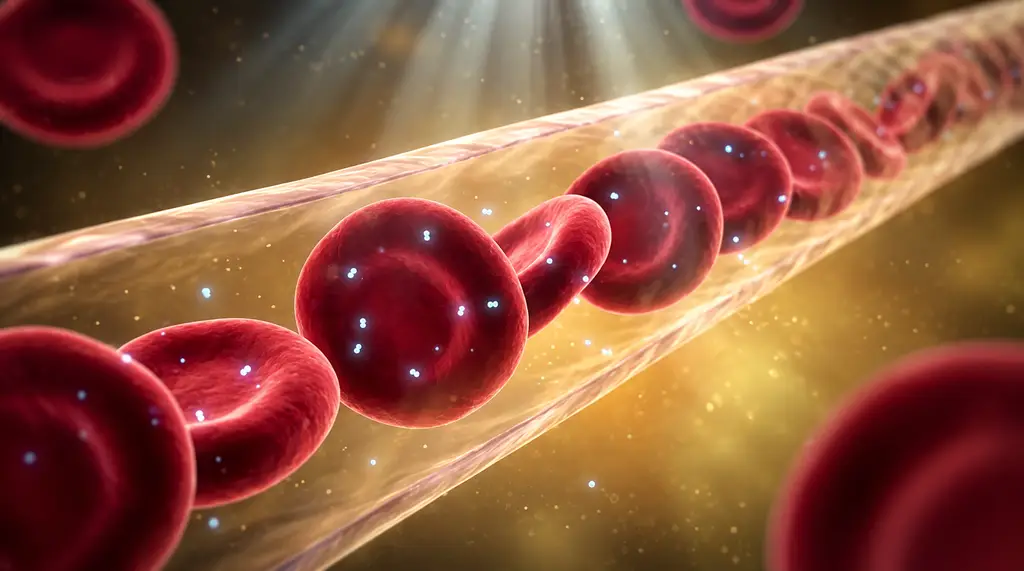
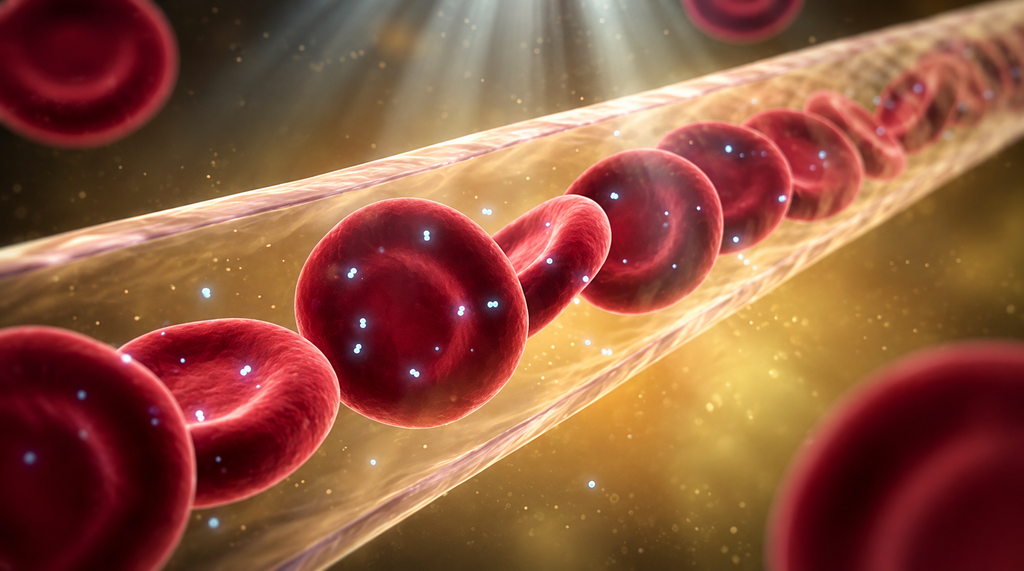
Most of the oxygen in your blood rides inside red blood cells, attached to a protein called hemoglobin.
Your heart pumps those cells through blood vessels that branch into smaller and smaller channels. The tiniest are called capillaries, and that’s where oxygen finally leaves the bloodstream and moves into the tissue around it.
That journey depends on several things working together: enough oxygen in the blood, adequate hemoglobin to carry it, steady blood flow to the tissue, and a clear path for oxygen to cross from the capillaries into the cells.
A pulse oximeter, the small clip placed on your fingertip, offers useful information about what percentage of the hemoglobin in your arteries is carrying oxygen. But it can’t tell us how well oxygen is reaching one specific tissue, like a healing tendon.
What Do Cells Do With Oxygen?
Once oxygen reaches a cell, much of its value comes down to energy.
Inside most cells are tiny structures called mitochondria. They turn energy from the food you eat into a form cells can spend, called ATP. Oxygen allows them to do that efficiently.
Cells use that energy to maintain themselves, communicate, build proteins, move substances in and out, and replace worn or damaged parts.
Injury raises the demand. Immune cells arrive. Damaged material is cleared away. Repair cells called fibroblasts lay down a new collagen framework. New blood vessels may form. Over time, that new tissue is reorganized and remodeled.
Repair is active biological work, and oxygen helps cells keep up with the energy it requires.
Oxygen Is Also Part of the Healing Signal
Oxygen isn’t only fuel. Changes in oxygen levels also carry information.
An injury can damage small blood vessels and temporarily lower oxygen in the surrounding tissue. Cells sense that drop and switch on pathways that help coordinate the response.
One of those responses is the growth of new blood vessels, a process called angiogenesis. As these vessels develop, they help restore the flow of oxygen and nutrients to tissue that’s rebuilding.
In other words, a temporary drop in oxygen can contribute to the signals involved in repair. Severe or prolonged oxygen deprivation is a different story. Cells can’t sustain the demanding work of rebuilding for long without an adequate supply.
Circulation Is the Delivery System
Blood carries much more than oxygen.
It delivers glucose, amino acids, hormones, immune cells, minerals, and other building blocks for healing. It also carries carbon dioxide and metabolic waste away from tissues.
Think of it like the road into a construction site. The materials can be sitting in the warehouse, ready to go, but if the road is narrow or blocked, the crew still waits.
Blood supply also varies throughout the body. Some tissues are rich in blood vessels, while others have a more limited blood supply. Tendons and ligaments can have regions with fewer blood vessels, and articular cartilage has no direct blood supply at all. Injury can change local conditions even more through damaged vessels, swelling, and inflammation.
This may help explain why some tissues seem to heal quickly while others take much longer.
Cells Respond to Their Chemical Surroundings
Using oxygen also produces byproducts.
As cells go about their normal metabolism, they create reactive molecules. Scientists describe the balance of these molecules as the redox environment. In small, controlled amounts, some act as messengers, helping regulate antioxidant defenses, inflammation, and how cells respond to stress.
When they build up beyond what the body can manage, a state called oxidative stress, they can damage proteins, fats, DNA, and other cell structures.
Cells are constantly reading their surroundings. Oxygen levels and chemical changes send information. So do mechanical forces.
Together, these signals shape how cells behave, adapt, and respond to injury.
Healing Happens in Context
A healing tendon, ligament, muscle, bone, or joint exists inside a much larger biological system.
The tissue needs oxygen and nutrients delivered through circulation. Its cells need enough energy to rebuild. Immune activity has to be coordinated. And as healing progresses, physical forces help guide remodeling and restore the tissue’s capacity to handle everyday demands.
These factors interact. A tissue may have the raw materials it needs but limited delivery. It may have good circulation but face demands it isn’t ready for yet. Or the injury itself may have changed local conditions in ways that slow recovery.
Regenerative medicine is built on this same understanding. These approaches are designed to work with the body’s own repair processes by influencing the conditions around injured tissue.
They don’t do the healing themselves. Your cells and tissues still carry out that work.
Related Articles
Continue Your Discovery
When recovery takes longer than expected, it’s easy to focus only on the place that hurts.
Pain can show where a problem is being felt, but it may not explain everything affecting recovery.
What tissue is involved? What happened to it? Is it getting the oxygen and nutrients it needs? How far has healing progressed? What can it handle now, and how is it being loaded? Is anything else adding to the body’s demands?
Those questions help build a clearer picture before deciding on a direction.
Discovery Before Direction means looking at the conditions surrounding healing, rather than reaching for another treatment simply because a symptom hasn’t gone away.
When we understand the tissue, the injury, and the conditions recovery is happening in, we can make more informed decisions about what that tissue may need next.
FAQ
Why do cells need oxygen?
Cells use oxygen to produce ATP efficiently inside the mitochondria. ATP provides usable energy for cellular maintenance, communication, protein production, transport, repair, and many other biological processes.
How does oxygen get from your lungs to your cells?
Oxygen crosses from the lungs into the bloodstream and attaches primarily to hemoglobin inside red blood cells. The heart circulates that blood throughout the body, eventually reaching tiny capillaries where oxygen can move into surrounding tissues and cells.
Does a normal pulse oximeter reading mean every tissue is getting enough oxygen?
A pulse oximeter measures the percentage of hemoglobin in arterial blood carrying oxygen. It provides useful information about blood oxygen saturation but doesn’t directly measure oxygen delivery within an individual tissue.
Why is circulation important for healing?
Circulation delivers oxygen, glucose, amino acids, hormones, immune cells, minerals, and other resources to healing tissues. Blood flow also helps carry carbon dioxide and metabolic products away.
What is angiogenesis?
Angiogenesis is the formation of new blood vessels. During healing, signals from injured tissue can stimulate new vessel growth, helping restore the delivery of oxygen and other resources needed for repair.