
Think about what recovery can look like from the outside. You may be lying on the couch after surgery. Resting in bed with an infection. Taking it easy after an injury, moving less, exercising less, doing fewer of the things that normally require physical effort.
And yet you may feel surprisingly depleted. It can seem strange. If you’re doing less, shouldn’t your body need less energy?
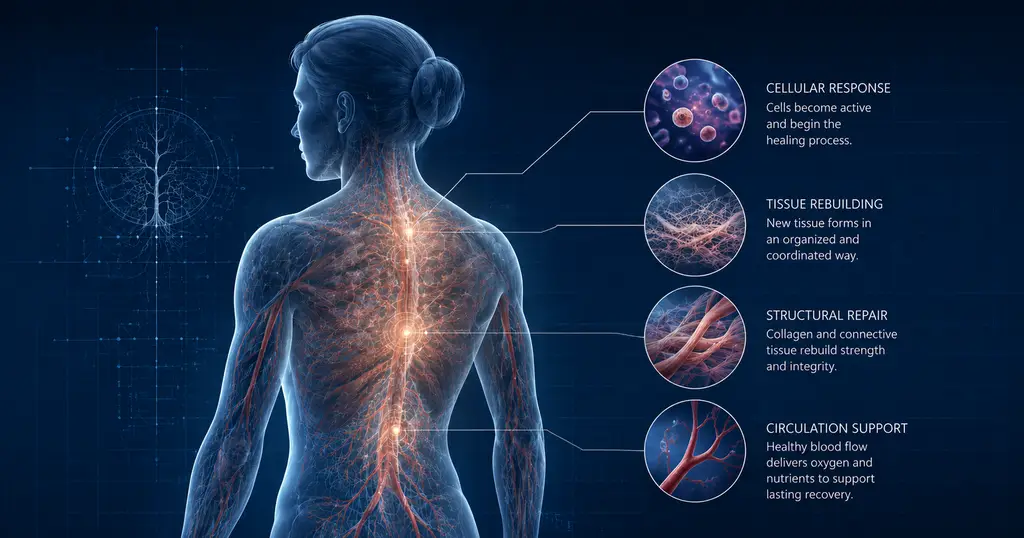
From the outside, maybe. But inside the body, something very different can be happening. Damaged tissue is being cleared and rebuilt. Immune cells are responding. New proteins and cellular structures are being made. Cells may be are migrating, dividing, communicating, changing what they’re doing as healing moves forward.
You may be resting. Your biology isn’t.
Recovery isn’t the absence of work. It’s a different kind of work. And that work requires energy.
Your Body Is Not Resting Just Because You Are
Every cell in your body requires energy simply to stay alive. Cells use that energy to maintain their internal environment, move substances across membranes, manufacture proteins, communicate with other cells, and perform the specialized jobs that keep tissues and organs functioning. That work never stops.
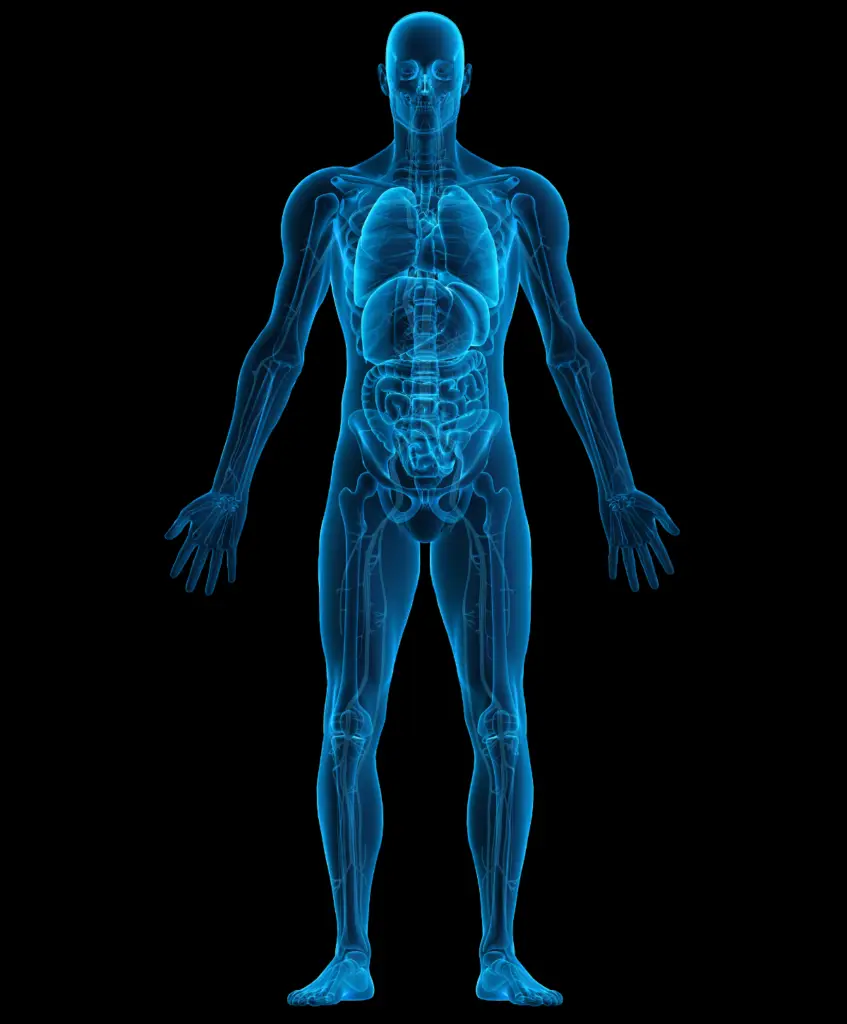
Your heart still needs to beat. Your brain still needs to function. Your lungs still need to exchange gases. Your kidneys still need to filter blood. Your digestive system, immune system, muscles, endocrine system, and nervous system keep carrying out countless processes whether you’re running a marathon or sound asleep.
Now add an injury, infection, illness, or another need for repair. The body has additional work to do. Recovery requires energy because that additional biological work has to be powered. Recovery doesn’t replace its normal workload. It gets added to it.
Repair Is Metabolically Expensive
When tissue is damaged, healing requires much more than simply waiting for the damaged area to return to normal. Cells have jobs to perform.
Immune cells may need to travel into affected tissue, respond to microorganisms or damaged material, clear debris, and coordinate with other cells. Cells involved in repair may need to migrate into an injured area, divide and create new cells, or manufacture proteins, membranes, signaling molecules, and components of the extracellular matrix that gives tissue its structure.
Blood vessels may need to change, or new vessels may need to form. Damaged structures may need to be rebuilt. Newly repaired tissue may eventually need to be reorganized and remodeled.
None of this happens for free. Moving a cell requires energy. Dividing a cell requires energy. Building proteins requires energy. Transporting molecules requires energy. Maintaining the chemical and electrical differences across cell membranes requires energy.
Healing is not passive. It’s an energy-dependent process.
What Do Cells Actually Spend Energy On?
When we talk about “energy,” it’s easy to picture the energy you feel when you wake up refreshed, or the lack of energy you feel after a long day. But cellular energy is something more specific.
Cells continually convert available fuel into forms of energy they can use to perform biological work. One of the most important is a molecule called ATP, or adenosine triphosphate. You can think of ATP as a form of immediately usable cellular energy.
The details of how cells make ATP deserve their own conversation. For understanding recovery, the important point is that cells need a continuous supply of usable energy to do their jobs.
A cell can’t simply decide to move into damaged tissue. Its internal structures have to reorganize and generate movement. A cell can’t simply decide to divide, either. It has to duplicate DNA, manufacture cellular components, reorganize those components, and eventually split into two functioning cells. A fibroblast can’t simply “repair tissue.” It has to manufacture and organize components of the extracellular matrix. And an immune cell can’t respond to an injury without carrying out the chemical reactions, movement, signaling, and cellular processes that make that response possible.
The word healing makes all of this sound like one thing. At the cellular level, it’s thousands of energy-dependent tasks happening in coordination.
Even the Immune Response Has an Energy Cost
Inflammation gives us a good example. When tissue is injured or the body detects an infection, immune cells don’t just switch on and keep doing what they were already doing. Their activity changes.
Some immune cells move rapidly into affected tissue. They engulf microorganisms or damaged cells, manufacture and release signaling molecules, and communicate with surrounding cells. Later, other cells step in to clear spent immune cells and help the tissue transition toward resolution and repair.
Those changing jobs come with changing metabolic needs. Immune activity requires energy. The cells doing that work need fuel, oxygen, usable energy, and the metabolic machinery to carry out their changing responsibilities.
This adds another layer to what we learned about inflammation. The body’s response to damage doesn’t just need the right cells in the right place. Those cells need the energy to do their work, too.
Healing Changes the Body’s Priorities
Your body doesn’t keep a separate battery labeled For Healing Only. The energy and resources used during recovery exist within a much larger biological economy. At the same time your body is repairing tissue, it still has to maintain everything else required for survival and normal function. It’s constantly allocating resources among many competing demands.
We can see an extreme version of this after major injuries, burns, or significant trauma. Under those circumstances, the body’s metabolism can change dramatically. Energy expenditure may rise. Stored resources can be mobilized. Metabolism can shift in response to the enormous demands created by injury, immune activity, and tissue repair.
Most everyday healing isn’t comparable to severe trauma, and we shouldn’t treat it as though it is. But the underlying principle holds: repair creates demand. The greater the biological challenge, the more work the body may have to coordinate alongside everything it was already doing.
Which helps explain something that can otherwise seem contradictory. A person can be physically doing very little while their body is biologically very busy.
Energy and Building Materials Aren’t the Same Thing
Imagine you’re rebuilding part of a house after it’s been damaged. You might have stacks of lumber, drywall, wiring, concrete, and every other material required for the project. But materials alone won’t rebuild the house. Someone still has to do the work.
The body faces a similar challenge. Repair requires raw materials. Amino acids can be used to build proteins. Fatty acids contribute to cellular structures and signaling molecules. Glucose and other fuels can enter metabolic pathways. Vitamins and minerals participate in many of the reactions involved in normal cellular function.
Those materials matter enormously. But having building materials available and having the ability to perform the work of rebuilding are not the same thing. Cells still have to transport those materials, transform them, assemble them into new structures, move them where they’re needed, and maintain the machinery doing the work. That requires energy.
So healing depends on both sides of the equation. What does the body have available to build with? And does it have the capacity to power the work of rebuilding?
Having Fuel Doesn’t Automatically Mean Cells Can Use It
This is another place where the conversation can become too simple. If healing requires energy, it might sound as though the solution is simply to provide more calories. But biological energy production doesn’t work quite that way.
Food provides potential fuel and raw materials. Cells still have to process those substrates and convert them into usable energy, and that depends on many processes working together. Nutrients need to be digested, absorbed, transported, delivered. Oxygen has to reach tissues. Circulation helps move oxygen, nutrients, hormones, immune cells, and other substances throughout the body. Cells need functioning metabolic pathways and machinery capable of using what arrives.
This is why having fuel available and being able to use it effectively are different questions. It’s also why energy production can’t be reduced to one nutrient, one organ, or one cellular structure. Metabolism is a coordinated system, and healing depends on that system responding to changing demands.
Different Parts of Healing Have Different Metabolic Needs
One of the most interesting things about recovery is that the body’s metabolic needs aren’t identical from beginning to end. Healing changes over time.
Early in a response, immune defense and cleanup may be major priorities. Later, cells may be more focused on proliferation, rebuilding tissue, forming blood vessels, producing extracellular matrix, or remodeling newly repaired structures. The cells involved can also change how they process and use available fuels depending on what they’re being asked to do.
This ability to adjust metabolism is part of how cells adapt to changing circumstances. There isn’t one single “healing metabolism.” Recovery is dynamic. As the biological job changes, cellular metabolism may change with it. Healing is better understood as a coordinated process, not a switch that’s simply turned on until the body is repaired.
What Happens When Energy Metabolism and Repair Don’t Match?
Because repair requires energy, disruptions in metabolism can influence the environment in which healing takes place.
This doesn’t mean every slow recovery is caused by an “energy problem.” Healing can be affected by many factors, including the type and severity of the injury, infection, blood supply, immune activity, repeated tissue stress, medications, underlying health conditions, and many other variables. But cells cannot perform energy-dependent work without the metabolic resources and processes required to support it.
Research into wound healing has shown that altered cellular metabolism can affect several parts of repair, including immune activity, blood-vessel formation, fibroblast function, cell proliferation, and extracellular-matrix remodeling.
The important idea isn’t that one metabolic pathway controls healing. It’s almost the opposite: healing depends on many cells performing different jobs at different times, and those cells need the metabolic flexibility and resources to meet the demands of those jobs. When that coordination is disrupted, restoration can become more difficult.
Recovery Is Active Biology
We often think of recovery as what happens when we stop doing things: stop exercising, stop working, stop moving as much. Lie down. Sleep. Wait.
But biologically, recovery is not simply an empty space created by inactivity. It’s an active period of response, cleanup, rebuilding, adaptation, and remodeling.
The work may be invisible. You won’t feel your fibroblasts manufacturing extracellular matrix. You can’t watch immune cells changing their metabolism, or cells producing the proteins needed to rebuild tissue. But the work is happening, and it has a metabolic cost.
Resting doesn’t necessarily mean nothing is happening. Sometimes resting on the outside creates room for an enormous amount of work on the inside.
Related Articles
- What Does Your Body Need to Heal?
- What Is Inflammation?
- Building Blocks for Healing
- Sleep and Cellular Repair
Continue Your Discovery
If recovery seems unusually slow, or the body is struggling to restore itself, energy is only one part of the picture. The next question isn’t simply “How do I get more energy?”
It may be more useful to ask what the cells doing the work of repair actually need. Are the necessary building materials available? Can oxygen and nutrients reach the tissue? Is something continuing to create damage or demand? And are the systems responsible for producing and using energy able to support the work being asked of them?
Healing requires more than time. It requires the biological capacity to do the work of restoration.
FAQ
Why does recovery require energy?
Recovery requires energy because healing involves active cellular work. Immune cells respond and communicate, cells migrate and divide, proteins and cellular structures are produced, and damaged tissue is rebuilt and remodeled. These processes depend on usable cellular energy.
What does the body use energy for during healing?
Cells use energy for processes such as movement, division, protein production, molecular transport, immune activity, cellular signaling, and tissue remodeling. Different stages of healing can also involve different cellular and metabolic demands.
What is ATP and why does it matter for healing?
ATP, or adenosine triphosphate, is one of the primary forms of immediately usable energy in cells. Cells rely on ATP to power many of the processes involved in normal function and tissue repair.
Does resting mean the body uses less energy for healing?
Physical activity may decrease during rest, but the biological work of recovery can continue. Immune activity, cellular repair, protein production, tissue rebuilding, and other processes still require energy even while a person is physically resting.