Finding a lump in your breast can be unsettling, even when you’ve been told your breasts are naturally lumpy.
You may notice an area that feels thicker than the tissue around it, a small rounded lump, or tenderness that seems to come and go with your menstrual cycle. Perhaps you’ve noticed these changes for years and have been told you have fibrocystic breasts.
You’re far from alone. Fibrocystic breast changes are extremely common, affecting roughly half of women at some point in their lives.
It’s a common term, but one that doesn’t always come with much explanation. What exactly is changing inside the breast? Why does it happen? And how can you tell when something deserves a closer look?
What Are Fibrocystic Breasts?
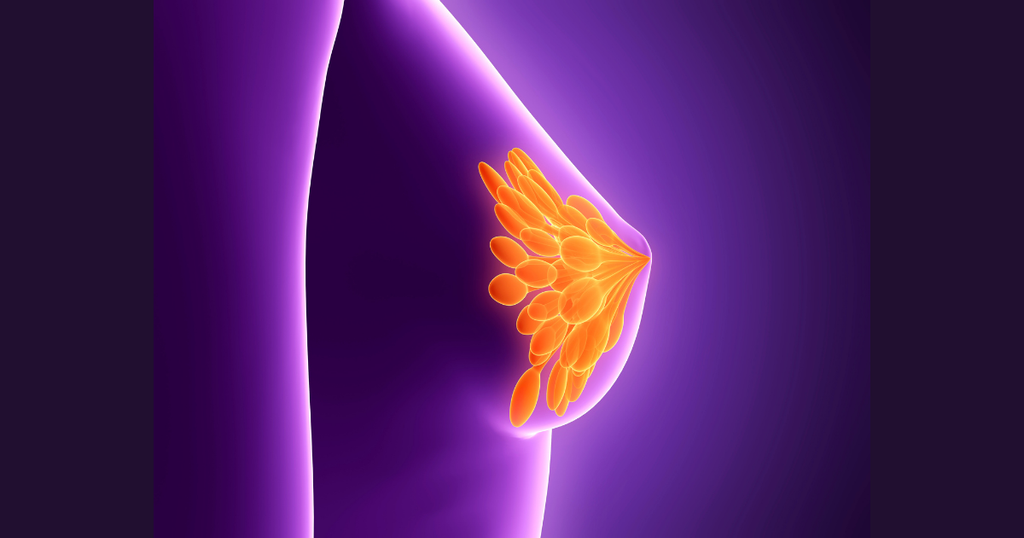
Breasts contain a network of milk-producing glands, ducts, connective tissue, and fat. Together, these structures give each breast its shape, texture, and function.
That tissue isn’t perfectly uniform. Some areas naturally feel softer, while others feel thicker or more textured.
Fibrocystic changes describe a collection of benign changes within breast tissue. The name reflects the two most common:
- Fibrosis is an increase in fibrous connective tissue. It can make an area feel firm, thickened, or somewhat rope-like, often without forming a distinct lump.
- Cysts are fluid-filled sacs. As fluid collects, a cyst may grow large enough to feel as a smooth, rounded, sometimes tender lump.
A woman may have cysts, fibrosis, or both. These changes are especially common during the reproductive years and are generally considered benign changes rather than a disease.
Some women notice them. Others first learn about them during an exam or imaging.
Why Does Breast Tissue Develop These Changes?
Breast tissue is highly responsive to hormones. Throughout the menstrual cycle, estrogen and progesterone influence the cells and structures within the breast, shifting glandular activity, fluid balance, and sensitivity.
For some women, those shifts are easy to feel. Breasts may become fuller, heavier, or more tender in the days before a period, then ease once it begins.
Researchers haven’t identified one specific hormonal pattern that explains why some women develop fibrocystic changes and others don’t.
Having fibrocystic breasts doesn’t automatically mean your estrogen is too high, your progesterone is too low, or that you have a hormonal imbalance. Often, it reflects breast tissue responding noticeably to normal hormonal fluctuations.
Fibrocystic symptoms often ease after menopause, when those cyclical fluctuations settle. They can persist, though, particularly in women using certain hormone therapies.
A Lump Isn’t Always a New Growth
When we hear the word lump, it’s natural to imagine something growing inside the breast. But a lump is simply an area that feels different from the tissue around it.
A cyst is a fluid-filled sac that may form a noticeable lump. Fibrosis involves changes in connective tissue that can make an area feel thicker or firmer. Neither is a tumor.
Still, touch has limits. Feeling a lump tells you something about its texture, but not what it’s made of. A cyst, an area of fibrosis, a benign solid growth, and a cancerous mass can sometimes feel surprisingly similar.
That’s why a new or changing breast lump should be evaluated rather than assumed to be fibrocystic.
Why Do Fibrocystic Breasts Sometimes Hurt?
Not every woman with fibrocystic changes has breast pain. For those who do, a cyst may become tender as it enlarges, and hormonal shifts can cause temporary swelling, fullness, or sensitivity.
Some women describe a dull ache or heaviness. Others notice tenderness in specific areas, often the upper outer portions of both breasts.
For many women, tenderness builds before menstruation and improves afterward. Noticing that pattern can help show whether hormonal fluctuations may be contributing.
Breast pain can also come from sources unrelated to fibrocystic changes, including muscles, connective tissue, or other structures near the breast.
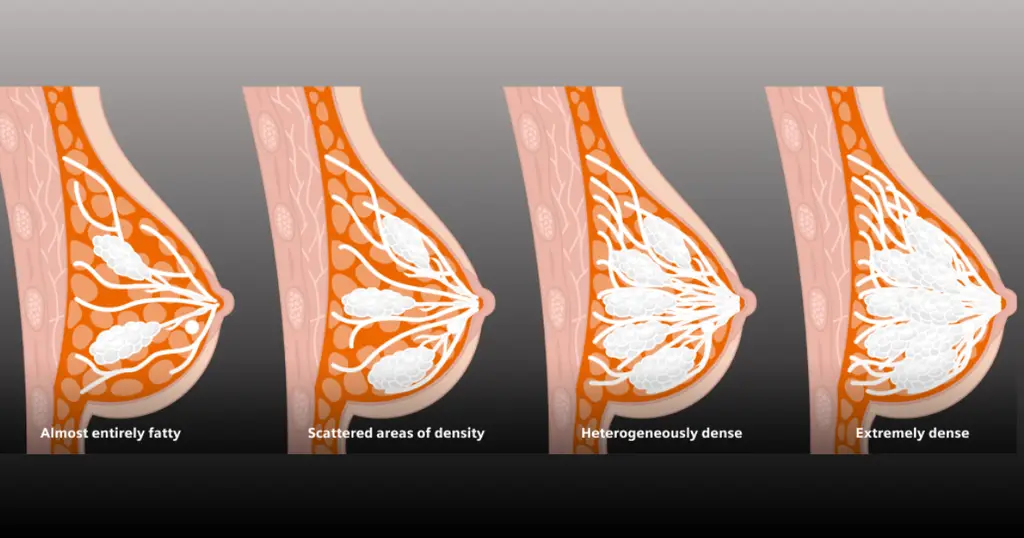
Are Fibrocystic Breasts the Same as Dense Breasts?
These terms are often confused, but they describe different things.
Fibrocystic changes describe what’s happening within breast tissue—cysts and fibrosis—and often how the breast feels.
Breast density describes how much glandular and fibrous tissue a breast contains compared with fat, as seen on a mammogram.
A woman can have dense breasts without fibrocystic changes, fibrocystic changes without dense breasts, or both. The distinction matters because each has different implications for screening and evaluation.
Do Fibrocystic Changes Increase Breast Cancer Risk?
For most women, no. Cysts and fibrosis on their own are benign and don’t increase breast cancer risk.
The picture is a little more nuanced because fibrocystic changes has historically been used as a broad label. Some findings involve only cysts or fibrosis. Others involve breast cells multiplying more than usual, known as proliferative changes.
Certain proliferative changes—particularly those in which cells look abnormal under a microscope, called atypia—are associated with an increased risk of breast cancer.
While imaging can identify many benign breast findings, distinguishing these cellular changes requires examining tissue under a microscope, usually from a biopsy performed when clinically indicated. They can’t be identified by how a breast feels.
For women with uncomplicated fibrocystic changes, lumpiness or cysts alone don’t signal increased risk.
When Should a Breast Change Be Evaluated?
Knowing how your breasts normally look and feel makes changes easier to recognize. But familiar patterns don’t replace evaluation when something new appears.
See a healthcare provider if you notice:
- A new lump, or a persistent change in an existing area—even if you’ve been told you have fibrocystic breasts
- Spontaneous nipple discharge, particularly if it’s bloody or comes from one breast
- New nipple inversion
- Skin dimpling, persistent redness, or other unusual skin changes
Depending on your symptoms, age, exam findings, and screening history, your provider may recommend breast ultrasound, diagnostic mammography, or other testing.
Ultrasound is especially useful for telling a fluid-filled cyst from a solid mass. Sometimes a biopsy is needed to know for certain.
The goal is to identify a change accurately rather than make assumptions based on how it feels.
What Can You Do About Fibrocystic Symptoms?
Many women with fibrocystic changes don’t need treatment. When symptoms are uncomfortable, a few simple approaches may help:
- A well-fitting, supportive bra to reduce movement and tenderness
- Warm or cool compresses
- Tracking symptoms to spot patterns related to your cycle
For persistent discomfort, a healthcare provider can discuss pain-relief options and check whether something else may be contributing. Occasionally, a large or painful cyst may be drained to relieve symptoms or help evaluate it.
You may also come across advice to cut out caffeine, take certain supplements, or try to balance your hormones. Research on these approaches is limited or inconsistent.
Trying them without understanding what’s actually driving your symptoms can mean guessing rather than discovering. And none of them should replace evaluation of a new or changing breast finding.
Understanding Your Normal
Every woman’s breast tissue has its own structure and texture. For some, that includes cysts or areas of fibrosis that may become more noticeable at different times.
Understanding fibrocystic changes can make those experiences less confusing—and give you a reference point. When something feels different, you’ll be better prepared to describe what you’ve noticed and have an informed conversation with your healthcare provider.
Related Articles
- Why Do My Breasts Hurt?
- What Causes Dense Breast Tissue?
- How Do Hormones Affect Breast Health?
- Breast Health Is About More Than Finding Cancer
Looking Deeper
There’s an important difference between how we experience breast tissue and how it’s evaluated.
When you feel your breast, you notice texture, firmness, tenderness, and whether one area feels different from another. Those sensations are real information, but they can’t reveal the tissue’s internal structure.
A fluid-filled cyst and a solid mass may both feel like lumps. Fibrous tissue may feel thickened without forming a lump at all.
Imaging adds another layer by revealing structures touch can’t distinguish. When needed, examining a tissue sample adds another.
Understanding breast health means bringing these pieces together: what you notice, what your provider finds, and what imaging reveals.
Continue Your Discovery
Understanding how your breast tissue normally feels—and why it sometimes changes—is an important part of caring for your breast health throughout life.
Denali’s Best Breast Health approach explores breast health more broadly, helping women better understand their individual breast tissue and the biological factors that may influence it over time.
Discovery Before Direction.
Frequently Asked Questions
1. What causes fibrocystic breasts?
Fibrocystic breast changes involve the development of fluid-filled cysts and increased fibrous connective tissue. Hormonal fluctuations, particularly during the menstrual cycle, are thought to influence these changes. However, researchers haven’t identified one specific hormonal pattern that causes fibrocystic breasts.
2. Are fibrocystic breasts dangerous?
Fibrocystic breast changes are generally benign and aren’t considered a disease. Simple cysts and fibrosis do not increase breast cancer risk. However, a new or changing breast lump should always be evaluated by a healthcare provider rather than assumed to be fibrocystic.
3. Do fibrocystic breasts increase breast cancer risk?
Simple fibrocystic changes generally do not increase breast cancer risk. However, certain proliferative breast lesions, particularly those involving atypical cells, are associated with increased risk. These cellular findings are different from uncomplicated cysts and fibrosis and require tissue examination for diagnosis.
4. Do fibrocystic breast changes go away after menopause?
Fibrocystic symptoms often become less noticeable after menopause as cyclical hormonal fluctuations decrease. However, some women continue to experience these changes, particularly when using certain hormone therapies.
5. How can you tell if a breast lump is a cyst?
A cyst may feel smooth, rounded, or tender, but touch alone cannot reliably distinguish a cyst from a solid mass. Breast ultrasound can help determine whether a lump contains fluid or solid tissue. New or changing breast lumps should be evaluated by a healthcare provider.