What happens inside your body when stress never seems to let up?
You wake up already thinking about everything you need to accomplish.
There are responsibilities at work, people depending on you, appointments to remember, and problems that need solving. Somehow, you keep up with it all.
From the outside, you’re handling life pretty well.
But lately, your sleep hasn’t been as restful. You feel tense even when nothing particularly stressful is happening. Small frustrations bother you more than they used to, and you’re finding it harder to concentrate.
You might wonder why you’re struggling when nothing in your life has dramatically changed.
Your body may be responding to demands that have continued longer than you realize.
What Are the Body’s Reserves?
Most people picture their reserves as a fuel tank. Stress drains it, rest refills it, and if you push hard enough, it eventually runs empty.
The body works a little differently.
Your reserves are better understood as your capacity to bounce back: how well your systems can respond to a stressful moment and then settle again.
And that capacity isn’t fixed.
Your Stress Response Is Designed to Help You
Stress is a normal and necessary part of human physiology.
When your brain senses a challenge or threat, it prepares your body to respond.
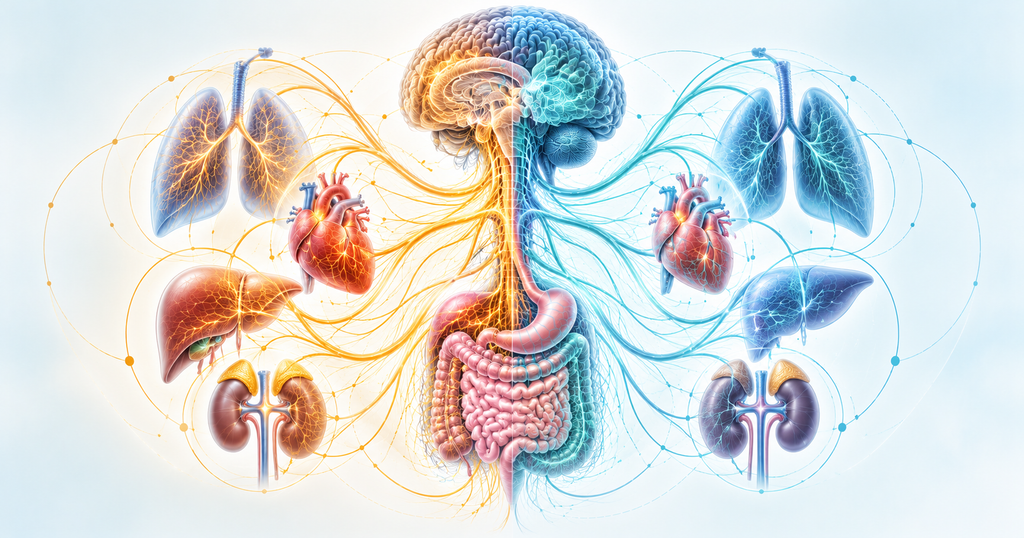
One part of your nervous system acts like an accelerator. It sharpens alertness, raises your heart rate, and sends more blood to your muscles. This is called the sympathetic nervous system. Hormones such as adrenaline help release energy quickly.
At the same time, your brain signals your adrenal glands, small glands that sit on top of your kidneys. This communication pathway, called the hypothalamic-pituitary-adrenal (HPA) axis, controls the release of cortisol, a hormone involved in energy, metabolism, and the stress response.
Together, these responses help you handle whatever is in front of you, whether that’s a near miss in traffic or a hard day at work.
Cortisol itself isn’t harmful. It helps regulate blood sugar, inflammation, and your sleep-wake cycle every day.
Your Body Also Has a Brake
If your body has an accelerator, it also has a brake.
Another branch of your nervous system, the parasympathetic nervous system, helps your body return toward a calmer state. It slows your heart rate, supports digestion, and participates in the processes that allow your body to recover.
The vagus nerve is central to this process. It carries signals between your brain and many of your organs, helping your body settle once the moment has passed.
In a healthy rhythm, the two systems work together. You respond, then you recover.
Trouble starts when stress keeps coming and your body spends more time on the accelerator than on the brake.
What Changes When Stress Becomes Chronic?
Not every stressful experience affects the body the same way.
How intense the stress is, how long it lasts, and how predictable it is all matter. So do sleep, health history, social support, and individual differences.
But prolonged stress can influence several important biological processes.
Sleep. Stress-related alertness can make it harder to fall asleep or stay asleep. Poor sleep then affects mood, concentration, and how well you handle the next day.
Heart and blood vessels. Stress temporarily raises heart rate and blood pressure. When it’s persistent, it’s associated with a higher risk of high blood pressure and heart disease, partly through its effects on sleep, eating, and activity.
Blood sugar and metabolism. Stress hormones make energy available when you need it. Over time, chronic stress can influence appetite, cravings, and how well your body regulates blood sugar.
Immune function. Your nervous, hormonal, and immune systems are in constant communication. Prolonged stress can change that conversation. Over time, these changes may influence susceptibility to certain infections, recovery from illness, and inflammatory activity.
These effects don’t necessarily happen together, and chronic stress doesn’t automatically cause disease.
The Weight of Accumulated Stress
Imagine carrying a backpack through your day.
Each stressful moment adds a small stone. No single stone is heavy. And normally, you get chances to set the backpack down and empty it.
But when the stones keep coming and there’s little time to unload them, the weight builds. You’re still walking, but every step takes more effort.
Researchers use the term allostatic load to describe the cumulative physiological burden associated with repeated or prolonged stress responses.
It’s one reason chronic stress tends to show up in several areas of health rather than as a single symptom.
Why Recovery Can Become More Difficult
Consider what happens after a poor night’s sleep.
You may have less patience, find it harder to concentrate, or feel more sensitive to ordinary frustrations.
That can make the next day feel more stressful.
Then, when bedtime arrives, your mind is still busy replaying everything that happened.
Sleep becomes difficult again.
Over time, stress and poor sleep can feed each other.
The same kind of loop can form elsewhere. Persistent muscle tension may lead to discomfort. Discomfort may interfere with sleep or movement. Moving less can affect mood and energy.
When one area struggles, it puts extra pressure on others.
That’s why someone under prolonged stress may notice several seemingly unrelated changes at once.
How Can You Rebuild Your Reserves?
Your capacity to bounce back can be strengthened.
Regular physical activity improves cardiovascular fitness and helps your body regulate stress. Consistent sleep supports your brain, metabolism, and immune system.
Supportive relationships, mental health care when you need it, and practical changes that lighten your load can also help.
Small steps count. A walk, a more predictable bedtime, a few minutes of slow breathing, or dealing with one persistent source of stress can all give your body more time on the brake.
But recovery isn’t always a matter of trying harder to relax.
Sometimes the demands themselves need to change. And when symptoms persist, a clinical evaluation can help sort out whether stress, a medical condition, or several factors are involved.
A Different Way to Think About Stress
The goal isn’t to eliminate stress. Hard things are part of life, and your body is equipped to respond to them.
What matters is how often those responses are activated, how long they continue, and whether your body has opportunities to return toward its usual balance.
Recovery is part of how the body maintains its capacity to meet the next challenge.
Related Articles
- The Body Is Always Adapting
- Why Disease Doesn’t Happen Overnight
- Your Nervous System: The Master Control System
Continue Your Discovery
When stress goes on long enough, the nervous system can become stuck in protection mode, holding your body on the accelerator even when you want to rest. Restless sleep, a tight jaw and shoulders, brain fog, and feeling overwhelmed by things that used to feel manageable can all be part of that pattern. But similar symptoms can arise for different reasons.
Denali’s Neural Reboot is a structured program designed to support nervous system regulation, resilience, and whole-body recovery. Every Neural Reboot begins with Discovery, so your plan is built around the patterns unique to your body.
Discovery Before Direction.
FAQ
1. What does chronic stress do to the body?
Chronic stress can influence several biological processes, including sleep, cardiovascular function, blood sugar regulation, and immune signaling. Its effects vary depending on the individual and the nature and duration of the stress.
2. Can chronic stress affect the nervous system?
Yes. Ongoing stress can influence how the sympathetic and parasympathetic nervous systems regulate alertness and recovery. Some people may experience difficulty relaxing, disrupted sleep, or increased physical tension.
3. What is allostatic load?
Allostatic load describes the cumulative physiological burden associated with repeated or prolonged stress responses. It helps explain how ongoing demands may affect multiple systems over time.