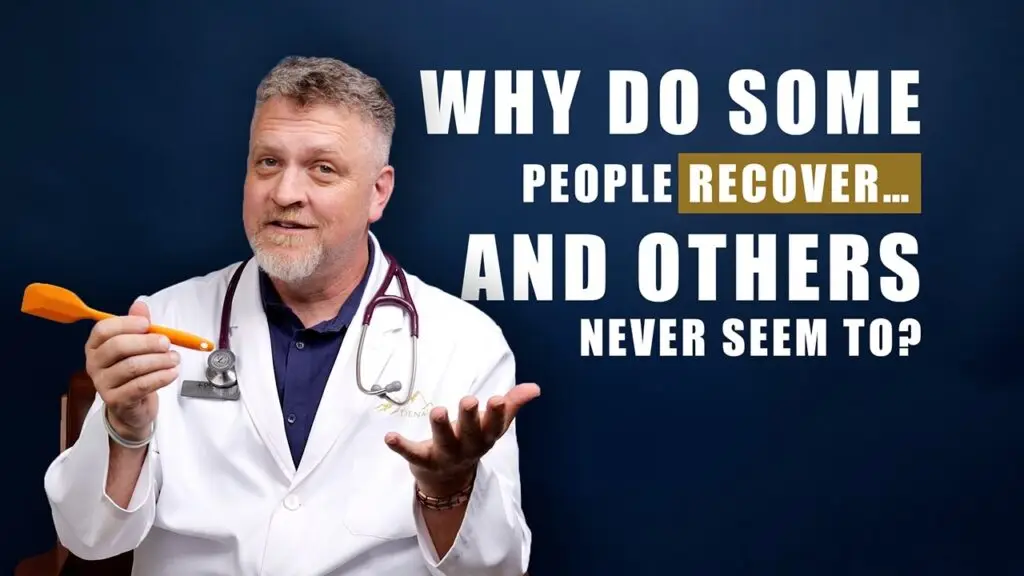
Why does healing take so long for some people? Two people can encounter the same infection, injury, or stressor and have very different experiences. One recovers and moves on. The other may continue struggling with fatigue, brain fog, inflammation, pain, or other persistent symptoms.
In this episode of Dr. Earl’s Insights, Dr. Earl explores why the answer may involve more than identifying a single diagnosis. Recovery can depend on the larger environment in which the body is trying to heal.
Watch the full video above, or explore the key ideas below.
Why Do Some People Recover While Others Keep Struggling?
00:44 – The 7 Triggers of Disease
At Denali, we use seven broad categories to explore what may be influencing health: infection, genetics, nutrition, injury, toxins, energy, and stress.
These triggers don’t necessarily occur in isolation. Multiple influences can accumulate over time, changing the demands placed on the body and its ability to adapt, repair, and recover.
01:15 – Why the Same Infection Can Affect People Differently
Epstein-Barr virus (EBV) provides a useful example. Many people are exposed to EBV, yet their experiences can be very different.
So identifying EBV may answer one question, but it can raise another: Why is this infection creating a greater burden for this person?
The answer may involve what else the immune system and body are managing at the same time.
01:50 – Keep Asking “Why”
Dr. Earl uses a simple spatula story to illustrate an important principle of Foundational Medicine: don’t stop investigating at the first explanation.
A diagnosis can provide valuable information, but it may not explain the entire pattern. Continuing to ask why can help uncover the factors influencing how the body is responding.
02:38 – Biofilms and Other Hidden Influences
Microorganisms can exist within organized communities called biofilms, which may make them more difficult for the immune system to address.
Other infections, fungal overgrowth, environmental exposures, nutritional factors, stress, and additional burdens may also be part of the larger picture. The point isn’t to assume these factors are present in everyone. It’s to recognize that persistent symptoms may require a broader investigation.
03:41 – Discovery Before Direction
Foundational Medicine begins by looking for connections.
Instead of stopping at “What diagnosis does this person have?” we keep asking: What is influencing this person’s ability to recover? What else is the body adapting to? What may be interfering with restoration?
Understanding those influences helps create a clearer direction for care.
That’s what we mean by Discovery Before Direction.
Further Reading & Resources
Start with the previous Dr. Earl’s Insights episode, Why Is Your Body Always Healing?, to explore the continuous repair and rebuilding happening throughout the body.
Then go deeper in our September cornerstone article, What Does Your Body Need to Heal?, which explores what the body needs to keep repair and restoration moving forward.