
Walking across a parking lot. Climbing stairs. Standing from a chair. Hiking your favorite trail. Keeping up with your grandchildren.
Your hips quietly power nearly every movement you make. They transfer force between your upper and lower body, absorb impact with every step, and provide the strength and stability that allow you to move confidently through life.
When something interferes with that system, pain doesn’t always stay in the hip. It may be felt in the groin, the buttock, the outside of the hip, the thigh, or even the knee.
Maybe your pain developed gradually over time. Perhaps it began after a fall, a sports injury, or months of repetitive activity. You may have been told you have hip arthritis, bursitis, tendonitis, or simply “hip pain.” Whatever diagnosis you’ve received, one question matters most: why is your hip hurting?
Understanding what’s happening inside your hip is the first step toward choosing the treatment that’s right for you.
Your hip is one of the strongest joints in the human body. Unlike the shoulder, which prioritizes mobility, the hip is built to generate power while remaining remarkably stable. The ball-and-socket joint allows movement in multiple directions while supporting your body weight every time you stand, walk, run, or climb. Surrounding that joint are muscles, tendons, ligaments, cartilage, bursae, and nerves working together to create smooth, efficient movement.
When one part of that system begins to struggle, the rest of the body compensates — and over time, those compensations can affect how you walk, how your back moves, how your knees absorb force, and how long you can comfortably stay on your feet.
One of the most confusing things about hip pain is that where you feel it isn’t always where the problem began. Pain in the groin often comes from the joint itself. Pain along the outside of the hip commonly involves tendons or bursae. Pain in the buttock may involve muscles, the hip joint, or even the lower back. Understanding which structure is actually responsible is one of the most important parts of building the right treatment plan.
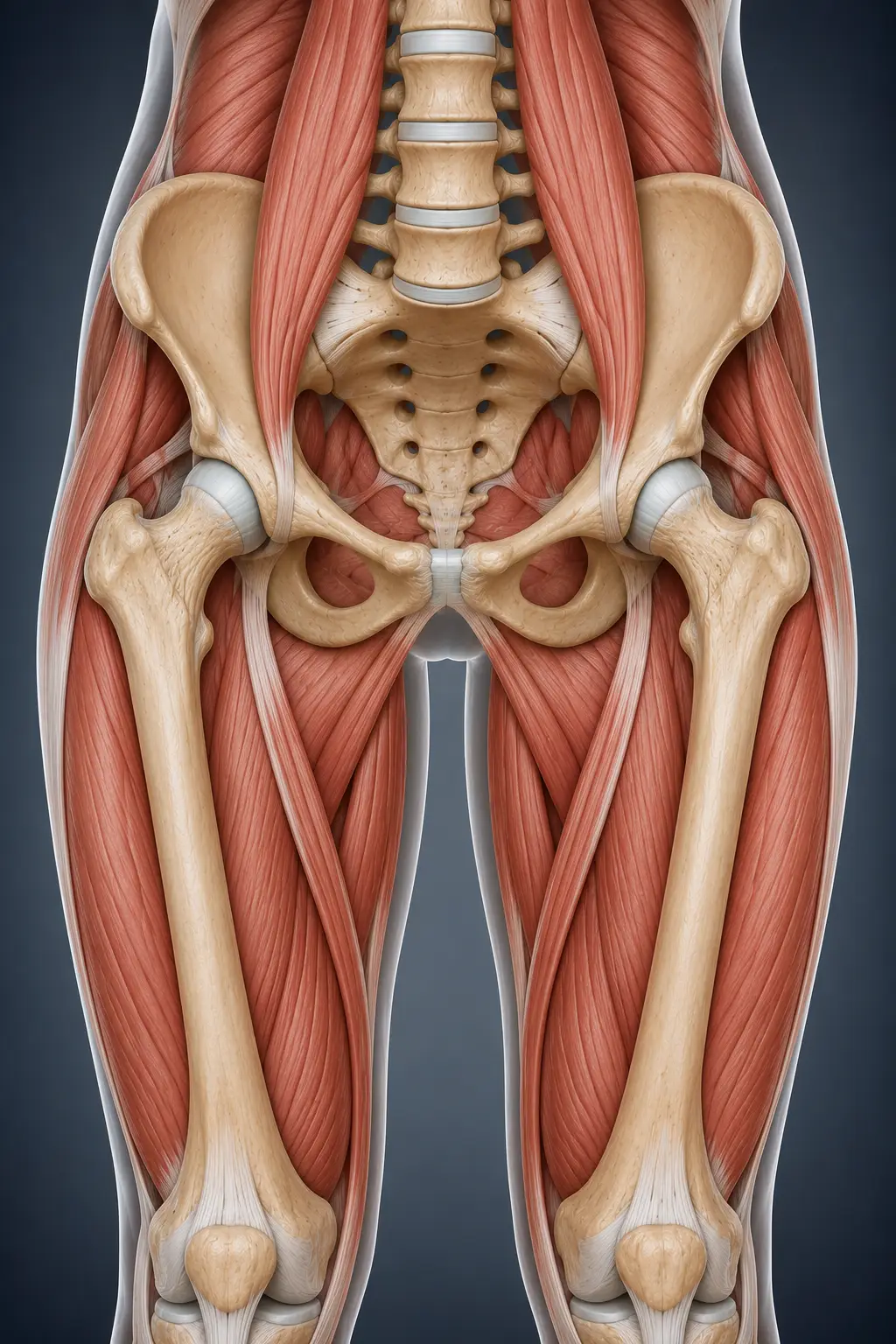

Hip pain is one of the most common musculoskeletal complaints — but it isn’t a diagnosis by itself. Pain may originate from the joint itself, the surrounding muscles and tendons, the bursae, nearby nerves, or even the lower back. Because several different structures can produce similar symptoms in similar locations, where you feel the pain rarely identifies its true source on its own.
Getting that answer right is what makes the difference between treatment that works and treatment that keeps missing the mark.
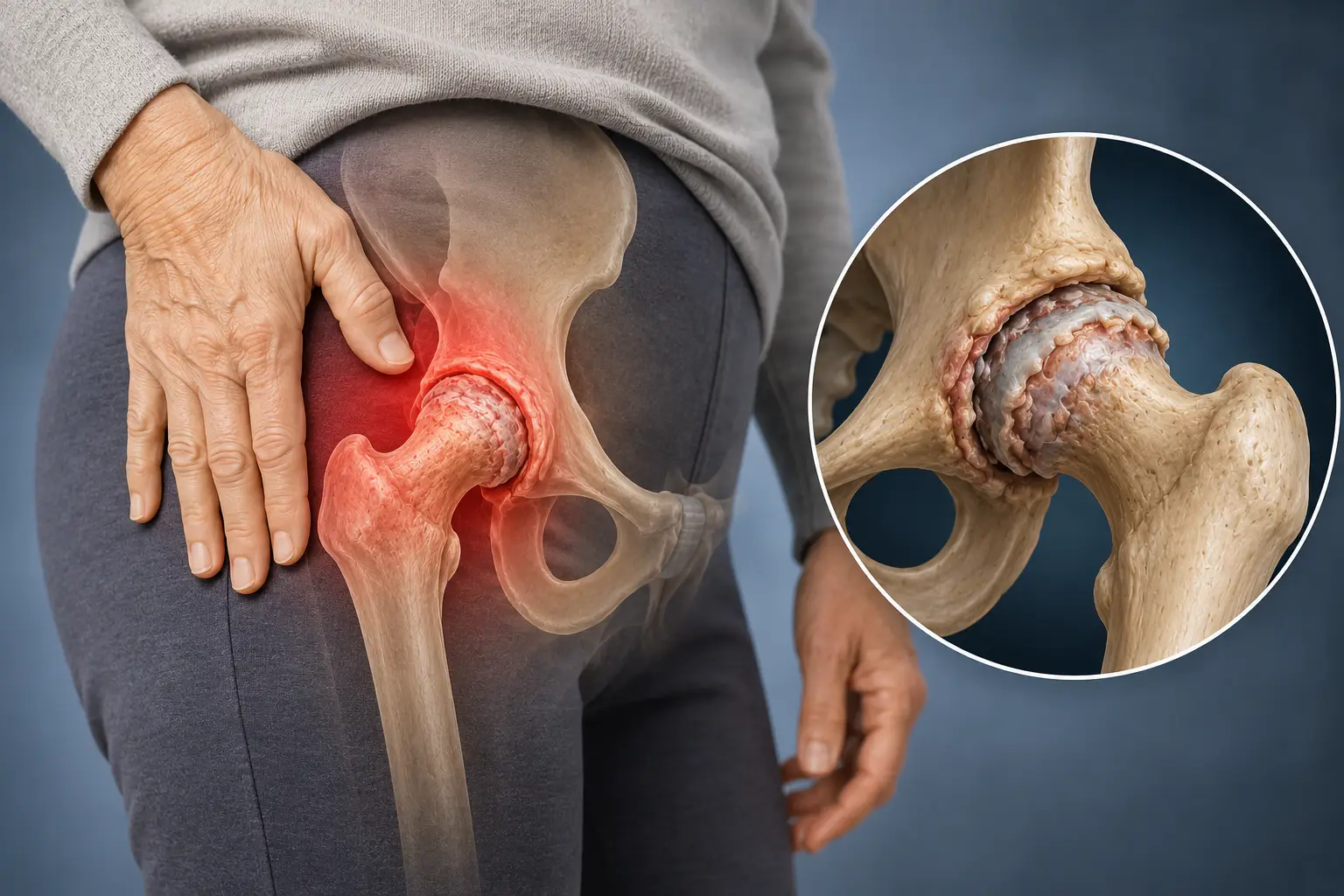
Hip arthritis develops when the protective cartilage covering the joint gradually wears away. As that smooth surface becomes thinner, movement creates increasing friction, leading to pain, stiffness, and reduced mobility. Many people first notice discomfort in the groin, difficulty putting on shoes, stiffness after sitting, or pain while walking longer distances.
Although arthritis becomes more common with age, it isn’t simply a consequence of getting older. Understanding why cartilage is breaking down faster than the body can maintain it often creates more opportunities for meaningful treatment than simply focusing on pain relief.
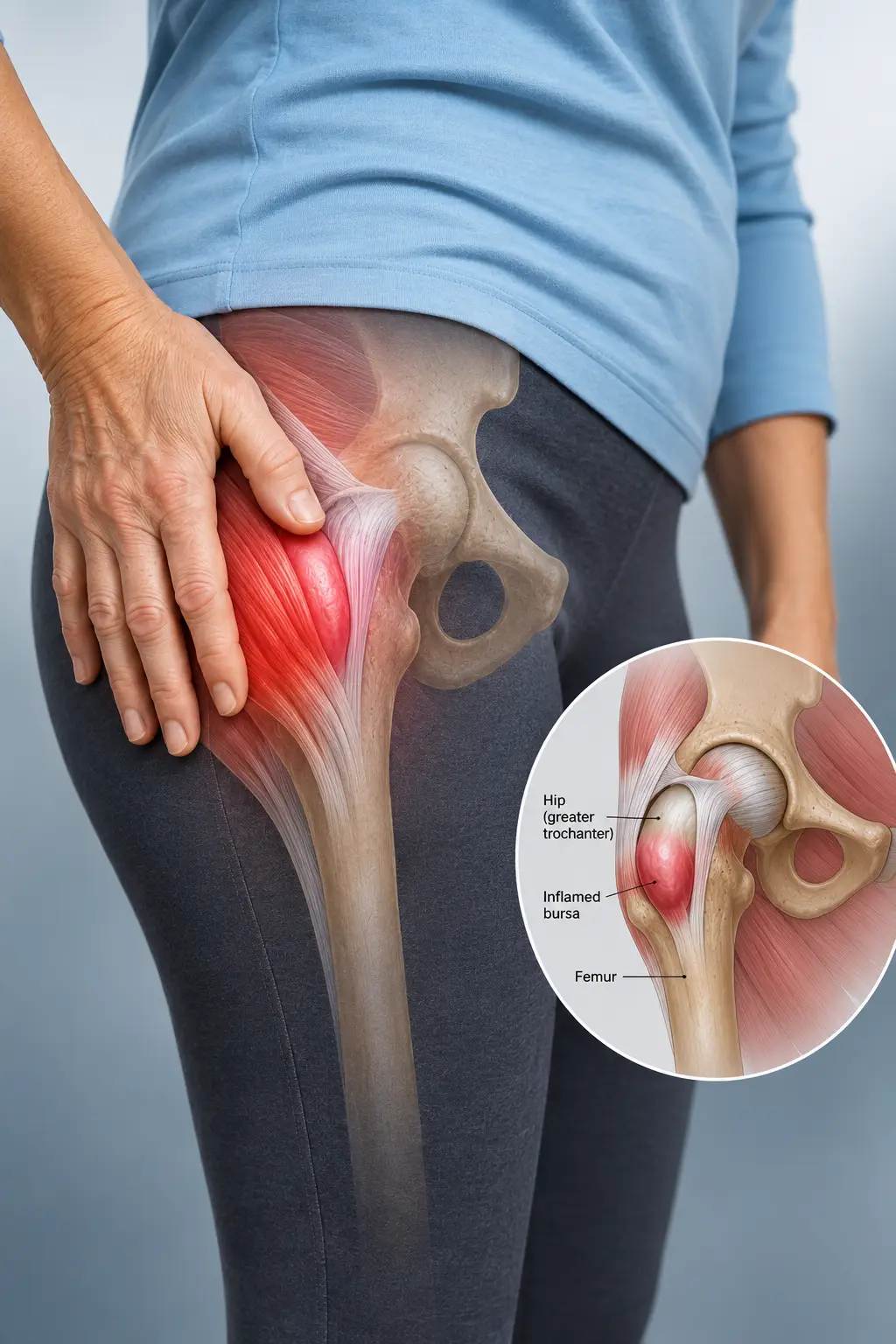
Around the hip are several small fluid-filled sacs called bursae that reduce friction between muscles, tendons, and bone. When one becomes irritated, inflammation develops — typically producing pain along the outside of the hip that worsens while lying on the affected side, climbing stairs, walking longer distances, or standing after prolonged sitting.
Hip bursitis often develops alongside other movement problems rather than appearing in isolation. Understanding why the bursa became irritated in the first place is what determines whether treatment creates lasting improvement or only temporary relief.
The gluteal tendons connect the muscles of your buttock to the outside of your hip. Over time, repetitive stress, muscle weakness, altered walking mechanics, or changes in load can irritate these tendons and reduce their ability to tolerate everyday activity. Pain is commonly felt along the outside of the hip and tends to worsen while walking, climbing stairs, standing on one leg, or lying on the affected side.
Because gluteal tendinopathy closely mimics bursitis, the two conditions are frequently confused — even though they involve different tissues and require different treatment approaches. An accurate diagnosis is essential.


Hip conditions often produce overlapping symptoms even when the underlying causes are very different. Common patterns include groin pain, pain on the outside of the hip, buttock pain, pain radiating into the thigh, stiffness, difficulty walking, pain climbing stairs, pain after prolonged sitting, pain while lying on one side, and reduced range of motion.
These patterns provide valuable clues — but identifying the tissue responsible requires a careful evaluation.
Hip pain rarely develops because of a single event. More often it reflects the combined effects of repetitive loading, previous injuries, muscle weakness, altered movement patterns, arthritis, tendon overload, occupational demands, and the cumulative effects of time and use.
Because the hip transfers force throughout the body, even small changes in how it functions can influence the lower back, knees, and pelvis. This is one reason two people with similar imaging findings can experience very different symptoms — and why treatment built around the individual rather than the MRI consistently produces better outcomes.

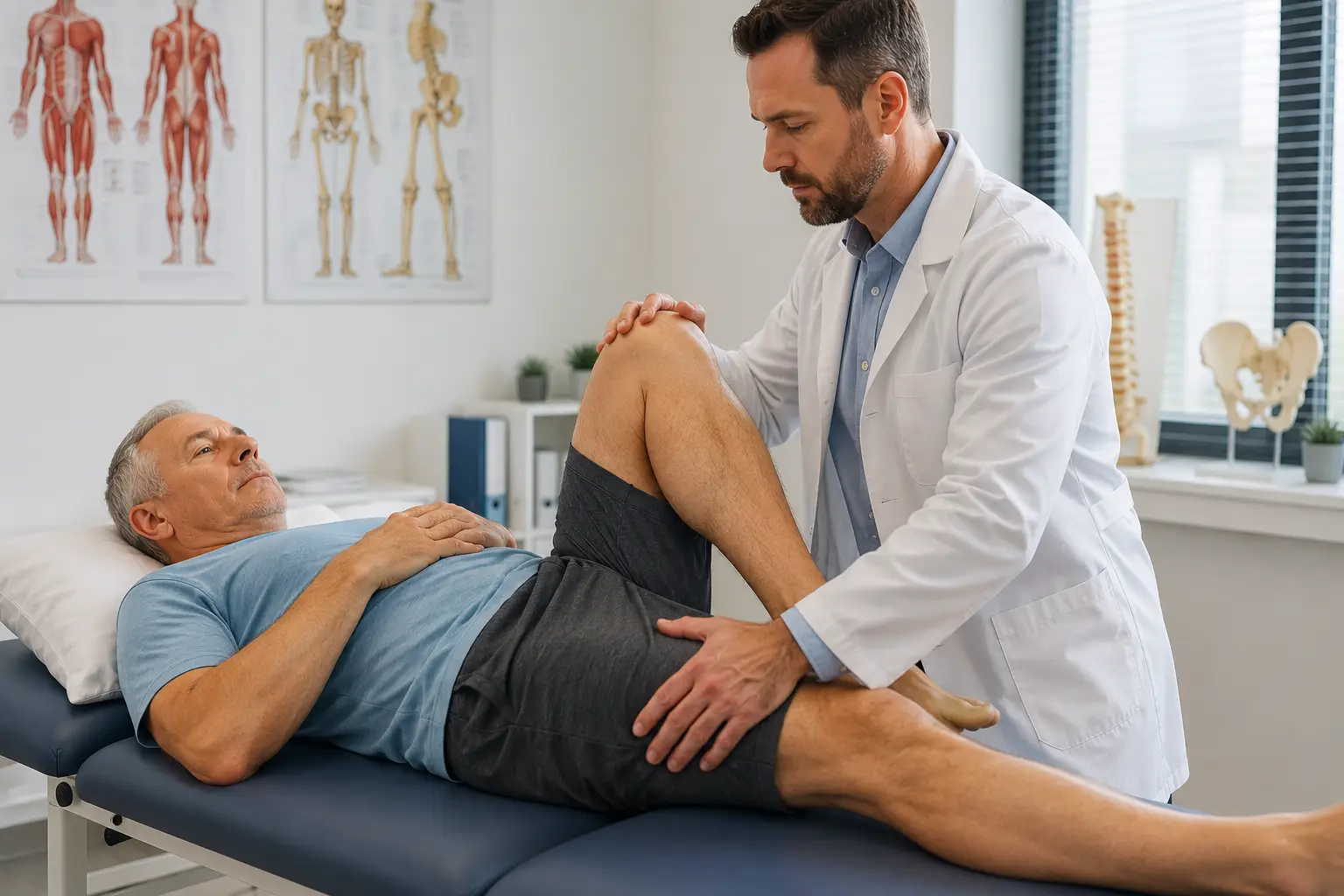
A thorough evaluation begins by understanding your history. Your provider will discuss when your symptoms began, where you feel pain, which movements reproduce it, previous injuries, the activities that matter most to you, and what you’ve already tried.
A detailed orthopedic examination evaluates strength, flexibility, balance, gait, range of motion, and how your hip works together with your pelvis, lower back, and knees. Because pain doesn’t always originate where it’s felt, the evaluation considers the entire movement system — not simply the joint itself. Imaging is ordered when it will meaningfully contribute to the diagnosis or influence treatment, not as a routine first step.
Every hip problem tells a different story, and treatment begins by understanding yours.
After a comprehensive orthopedic evaluation, your provider will discuss which path makes the most sense — whether that’s conservative rehabilitation, referral for surgical consultation, or regenerative medicine designed to support healing within the affected tissues rather than simply manage symptoms. For patients where broader factors may be influencing healing or recovery, a Total360 Discovery evaluation may also be recommended.
To learn more about how we approach hip pain and what regenerative treatment looks like, visit our Regenerative Medicine page.

No. Hip pain may originate from tendons, bursae, muscles, ligaments, nerves, or even the lower back. Arthritis is one possible cause — but far from the only one, and assuming it’s the source without evaluation often leads to treatment that misses the actual problem.
Pain while lying on the affected side is commonly associated with bursitis or gluteal tendinopathy, although other conditions can produce similar symptoms.It’s worth evaluating because treatment differs depending on which tissue is involved.
Yes. Because the hip transfers force throughout the body, changes in hip function frequently affect the lower back and knees — sometimes producing symptoms there before pain even develops in the hip itself.
Although both commonly cause pain on the outside of the hip and can feel nearly identical, they involve different tissues and respond to different treatments. Distinguishing between them is one of the reasons a thorough evaluation matters more than treating based on location alone.
Many patients with chronic hip pain may be candidates — but not everyone is. Your evaluation will help determine whether regenerative medicine is appropriate for your specific condition, and your provider will give you an honest picture of what it’s likely to accomplish.
A personalized evaluation can identify the source of your pain, explain your options clearly, and help determine the most appropriate path forward for your goals.
Enter your information below to learn how we've helped thousands treat the root source of their pain and helped them truly heal by triggering the body's innate healing system.