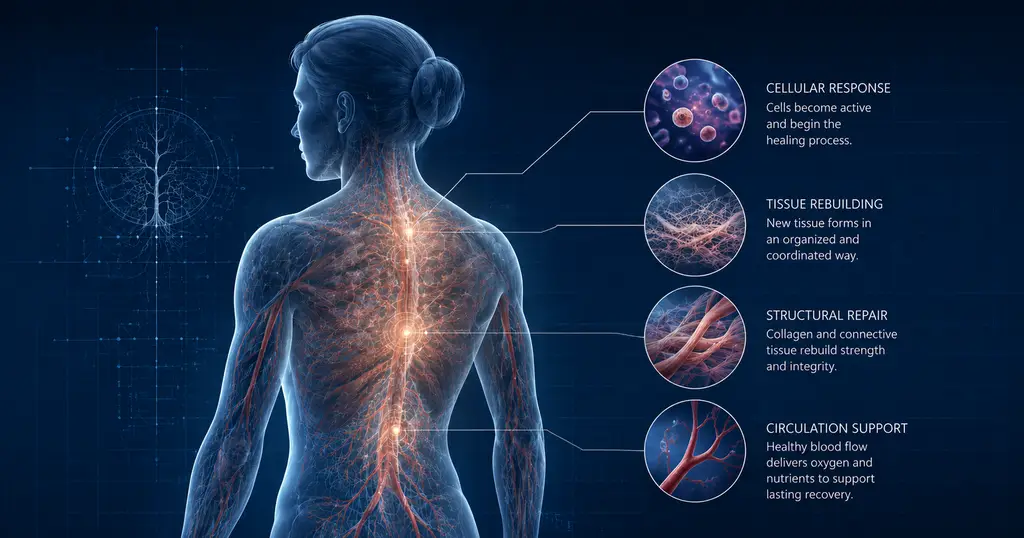
Your breast tissue is constantly responding to what’s happening throughout your body.
Hormones fluctuate. Blood delivers oxygen and nutrients. The lymphatic system moves fluid. Your immune system monitors tissue, while your metabolism and nervous system help regulate the environment in which your cells function.
These are some of the most important factors that affect breast health—and they reveal why healthy breast tissue can’t be understood in isolation.
In this episode of Dr. Earl’s Insights, Dr. Earl explores why breast health can’t be understood by looking at breast tissue alone—and why supporting lifelong breast health means paying attention to the entire body.
Watch the full video above, or explore the key ideas below.
00:58 – Moving Beyond Waiting and Screening
Breast health conversations often focus on mammograms, examinations, and detecting potential problems.
These tools are essential, but they tell us only part of the story.
Screening helps identify disease. Understanding breast health means also considering the biological environment in which breast tissue lives every day.
Rather than simply waiting for the next screening, we can become more informed about the systems influencing tissue health throughout life.
01:15 – Six Body Systems That Influence Breast Tissue
Breast tissue is remarkably responsive to signals from the rest of the body.
Six interconnected systems play important roles:
- Hormones: Influence breast tissue development, structure, and changes throughout life.
- Circulation: Delivers oxygen and nutrients while helping remove metabolic waste.
- Lymphatics: Help maintain fluid balance and support immune surveillance.
- Immune System: Monitors tissue and coordinates responses to injury and inflammation.
- Metabolism: Influences energy availability and the resources cells need to function.
- Nervous System: Helps regulate physiological responses to stress and changing demands.
None of these systems operates independently.
02:28 – Breast Tissue Responds to Its Environment
Breast tissue isn’t static. It changes throughout puberty, menstrual cycles, pregnancy, breastfeeding, and menopause.
These changes demonstrate something important: breast tissue is continually responding to biological signals.
Hormonal shifts, inflammatory activity, metabolic conditions, and other physiological influences can all affect how breast tissue functions.
Understanding those relationships gives us a broader perspective on breast health.
03:10 – Healthy Breast Tissue Doesn’t Exist in Isolation
We sometimes approach health as though every organ operates separately.
But breast tissue depends on the same interconnected systems that support the rest of the body.
This is why Dr. Earl encourages looking beyond the breast itself to understand the larger biological environment influencing its health.
03:51 – Becoming an Active Participant in Breast Health
Supporting breast health begins with understanding that the body is interconnected.
That doesn’t replace mammograms, appropriate screening, or medical evaluation. It expands the conversation to include the everyday conditions that support healthy tissue function.
Breast health isn’t just something we check. It’s something we can actively care for throughout life.
Further Reading & Resources
In our previous Dr. Earl’s Insights episode, The Absence of Disease Isn’t the Same Thing as Health, we explored why screening and lifelong health stewardship are equally important parts of the breast health conversation.
Continue learning in our October Discovery Journal cornerstone article, Breast Health Is About More Than Finding Cancer, where we explore the interconnected systems influencing breast tissue throughout life.