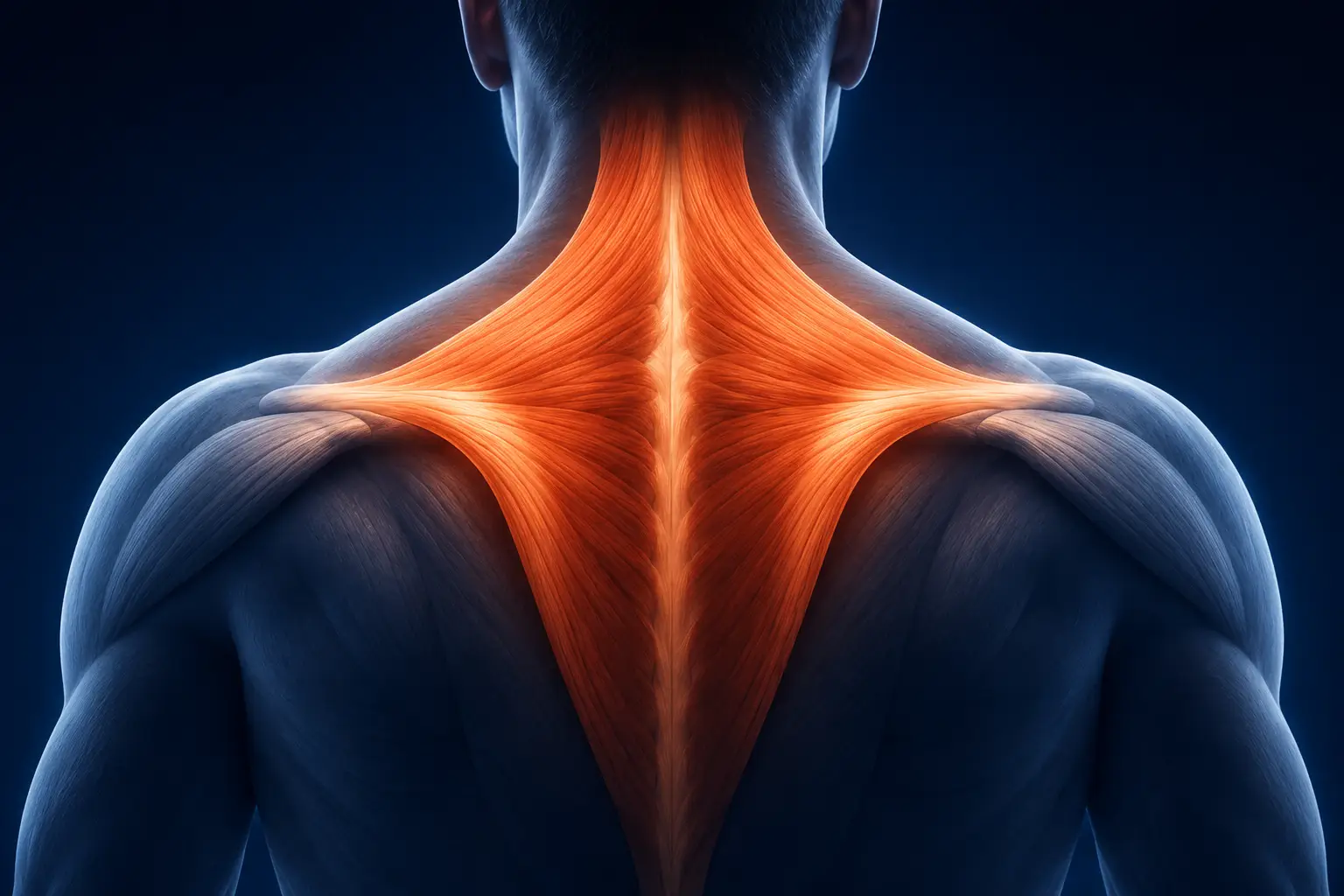
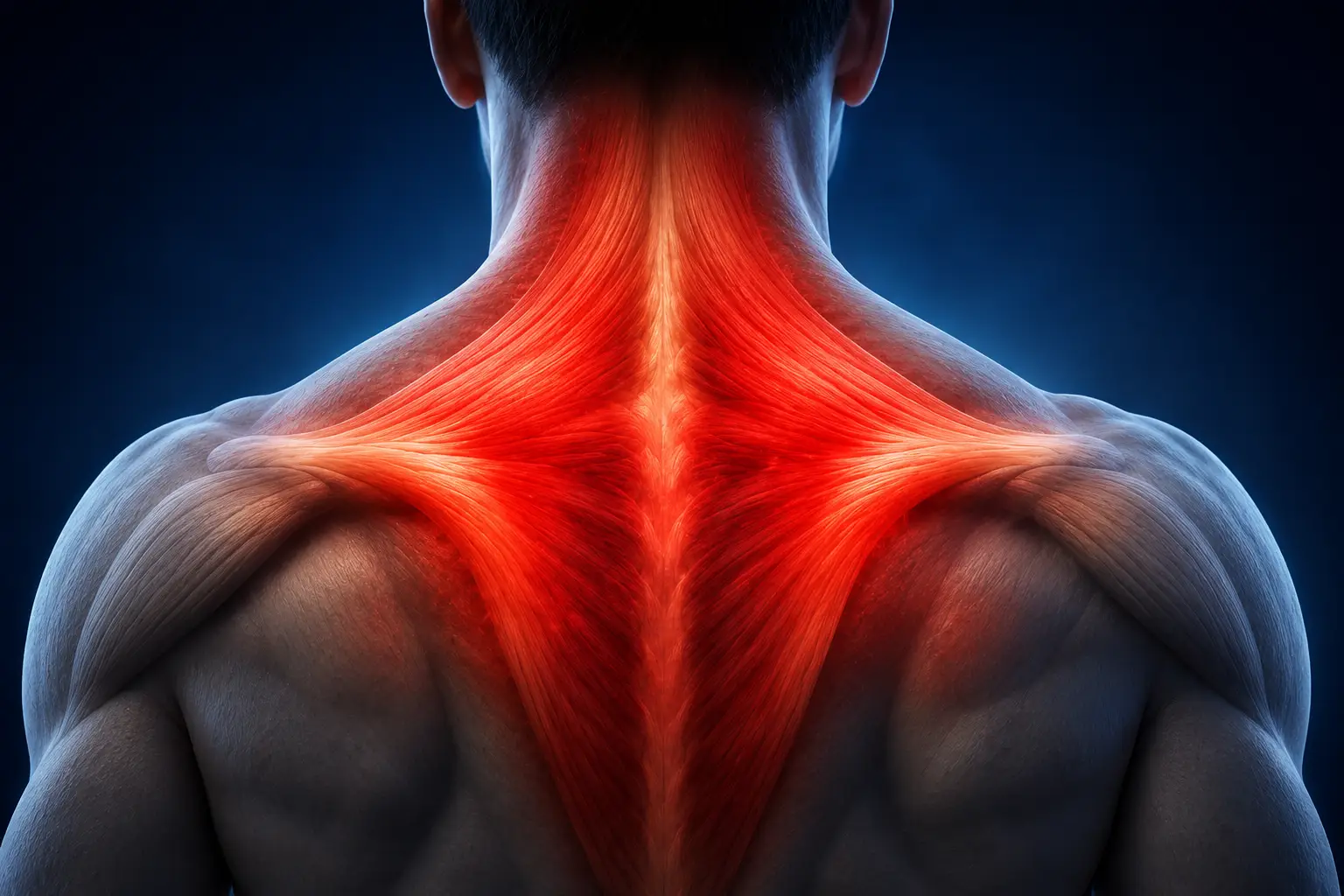
Your trapezius — the large, diamond-shaped muscle spanning your upper back, shoulders, and base of your neck — is the body’s primary storage site for physical and emotional stress. When you’re anxious, overworked, or under pressure, your shoulders instinctively rise toward your ears and your trapezius contracts. In a world of constant demands, this response gets triggered continuously.
Over time, the tension becomes locked into the muscle tissue itself, creating trigger points — hyperirritable spots within the muscle that hurt when pressed and refer pain to other areas. These trigger points commonly cause headaches at the base of the skull, temple pain, and discomfort radiating down the neck and into the shoulder blades.
Beyond the physical discomfort, chronic trapezius tension sends continuous signals to your brain that danger is present — even when you’re trying to rest. This creates a cycle that’s difficult to break from the outside: stress causes muscle tension, muscle tension signals the brain that you’re stressed, and the brain keeps you in a state of alert. Massage provides temporary relief. Stretching helps. But neither addresses the trigger points and neurological patterns keeping the tension locked in place.